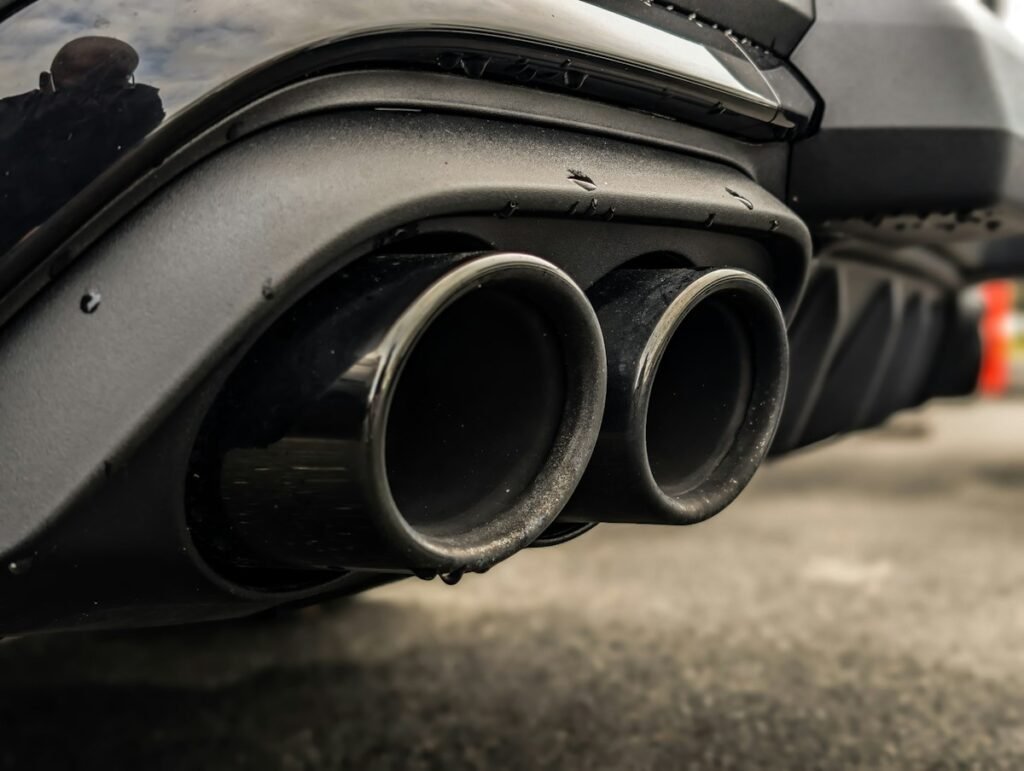
Most of us think about health in terms of food, sleep and exercise. We rarely think about the air inside our car.
Yet a car with a leaking exhaust can let fumes into the cabin. Those fumes can contain carbon monoxide, a gas you cannot see, smell or taste.
For families who spend hours on the road each week, on school runs, sport trips and long drives, that is worth knowing about.
If you are in Perth and suspect a problem, Genie Exhaust is a Kwinana Beach workshop that works on standard replacement, custom and performance exhaust systems.
This article covers what carbon monoxide is, how a car exhaust can become a risk, the warning signs to watch for, and what to do next.
What is carbon monoxide?
Carbon monoxide is a gas made when fuel does not burn fully. Car engines, gas heaters, barbecues and generators can all produce it.
When you breathe it in, it gets into your blood and reduces how much oxygen your body can carry. Your brain, heart and muscles all need that oxygen to work properly.
Because the gas has no colour or smell, people can be exposed without realising.
The Victorian Department of Health lists common symptoms of carbon monoxide poisoning as headache, nausea and vomiting, dizziness, weakness, shortness of breath, confusion and chest pain. It also notes these symptoms are easy to mistake for the flu or food poisoning. You can read its full carbon monoxide health advisory for more detail.
How a car exhaust becomes a health risk
Your exhaust system carries burnt gases from the engine to the back of the car, then releases them into the open air behind you.
When the system is in good shape, those gases stay outside the cabin. Problems start when there is a hole, crack or loose joint somewhere along the way.
Exhaust parts live a hard life. They sit under the car, close to the road, and deal with heat, water, dust and the odd speed bump. Over the years, rust and damage can wear them through.
Some common ways a leak can develop:
- Rust holes in the pipes or muffler
- Cracked or broken joints and flanges
- Worn or missing gaskets
- Damage from hitting a kerb, rock or speed hump
- Broken rubber hangers that let the system sag and rub
If a leak sits under the cabin, or the car has gaps in its body seals, fumes can find their way inside. The risk tends to be higher when you are stopped in traffic, idling, or driving with the windows up.
Who is most at risk?
Anyone can be affected by carbon monoxide. Some people may feel the effects sooner, or be at greater risk.
These include:
- Babies and young children
- Pregnant women and their unborn babies
- Older people
- People with heart or lung conditions
Children in the back seat may also be closer to where fumes can build up. They may not be able to tell you they feel unwell, or they might just seem tired or grumpy.
Warning signs of a leaking exhaust
The good news is that a leaking exhaust often gives you some clues. Learning these signs is one of the simplest ways to protect your family.
Watch and listen for:
- A louder engine than usual, especially when you start the car or speed up
- A hissing, ticking or puffing sound from under the car
- A rattle or clunk from underneath, which may point to a loose or broken part
- A smell of exhaust fumes inside the cabin
- Visible rust holes or damage on the pipes or muffler
- A drop in fuel economy that you cannot explain
- The engine warning light coming on
None of these signs proves a leak on its own. They are all good reasons to have the car looked at by a qualified mechanic.
Signs in your passengers
Sometimes the first clue comes from the people inside the car.
Pay attention if you or your passengers often feel any of the following during or after a drive, and feel better once out in the fresh air:
- Headaches
- Feeling sick or dizzy
- Unusual tiredness or drowsiness
- Feeling confused or finding it hard to concentrate
These symptoms have many possible causes. If they keep showing up on car trips, it is worth checking the car and talking to your GP.
What to do if you suspect a leak
If you notice signs of a leak, act sooner rather than later.
- Open the windows to let fresh air into the cabin
- Avoid long drives until the car has been checked
- Never sit in a parked car with the engine running for long periods
- Book the car in with a qualified exhaust or mechanical workshop
- Ask them to check the full system, from the engine to the tailpipe
Carbon monoxide can also build up in closed spaces. Never leave a car running in a closed garage, even for a few minutes to warm it up. The Victorian Department of Health warns against leaving cars idling in basements or garages attached to a home.
When to get medical help
If anyone in the car feels unwell and you suspect carbon monoxide, get them out into fresh air straight away.
If symptoms are serious, such as trouble breathing, chest pain, confusion, fainting or a seizure, call 000 immediately.
For milder symptoms, or if you are unsure, contact your GP or a health advice line. Tell them you think carbon monoxide may be involved, so they can give the right advice.
This article is general information only. It is not a replacement for advice from a doctor or other health professional.
Simple habits that help
A few easy habits can lower the risk of exhaust fumes affecting your family:
- Have your exhaust checked as part of regular car servicing
- Listen for changes in engine noise and do not ignore new rattles
- Take note of any fume smell inside the car
- Keep the cabin well aired, especially on long trips
- Never run the engine in a closed garage or shed
- Fix rust and damage early, before it turns into a hole
Look after your car, look after your family
We often focus on seatbelts, car seats and safe driving, and rightly so. Exhaust health is easy to forget because it sits out of sight under the car.
A quick check now and then can pick up a problem before it becomes a risk to the people you love. If something sounds, smells or feels wrong, get the car looked at, and get medical help straight away if anyone is seriously unwell.